Skip to content

Elections

Trump Frees Drug Trafficker; US Meddles In Honduras’ Elections

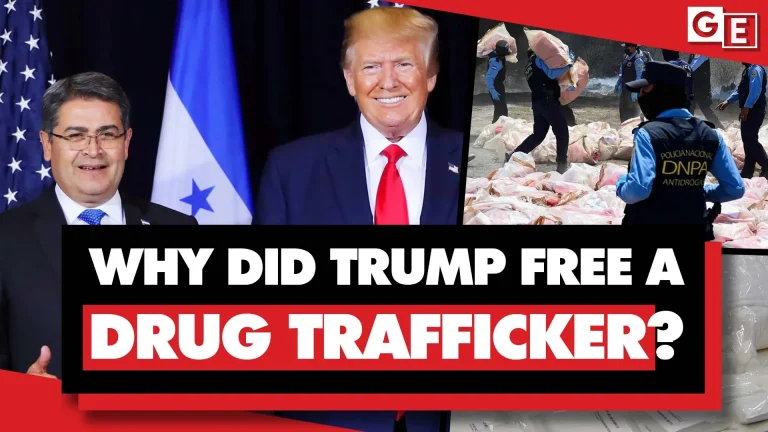
Donald Trump has pardoned and freed from prison one of the world’s worst drug dealers, the former dictator of Honduras, Juan Orlando Hernández, who was convicted of trafficking more than 400 tons of cocaine and machine guns into the United States. Meanwhile, the Trump administration has been openly meddling in Honduras’ 2025 election. Honduran electoral officials have revealed evidence of massive fraud, aimed at putting a right-wing US-backed candidate in power. The US government sponsored a military coup against Honduras’ democratically elected left-wing president in 2009.

Honduras: Plot By The US-Backed Far Right Causes Political Crisis

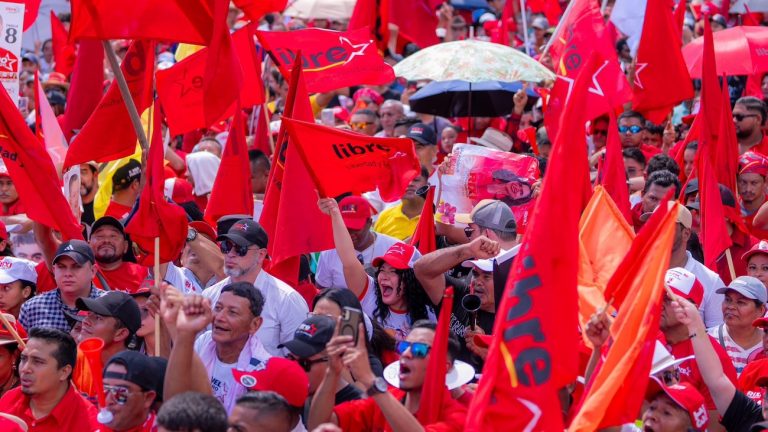
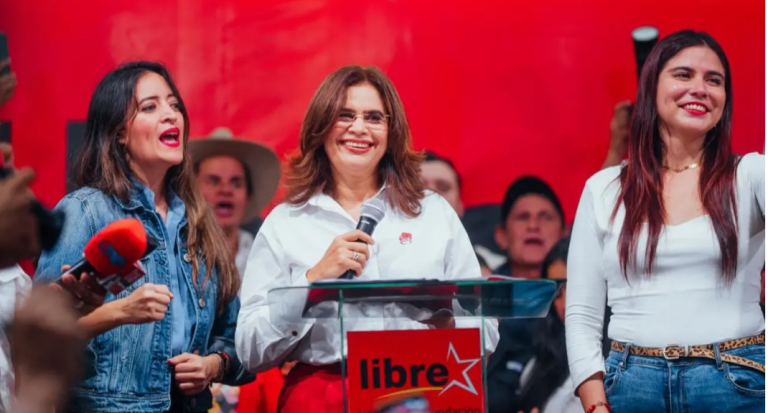
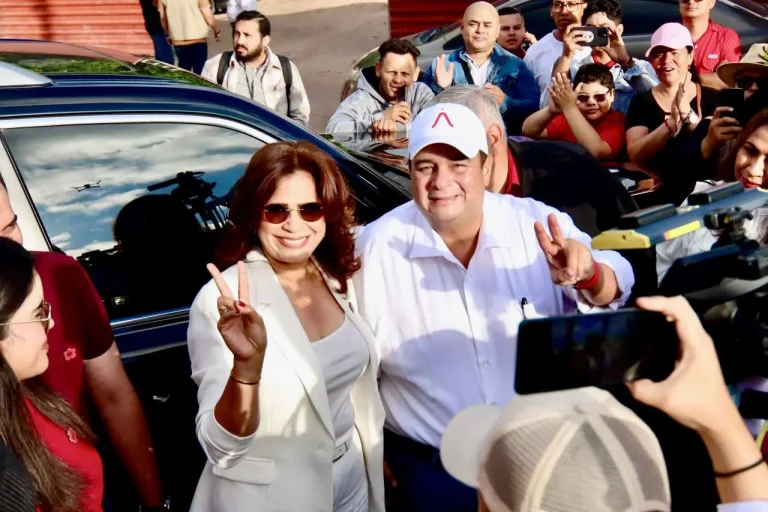
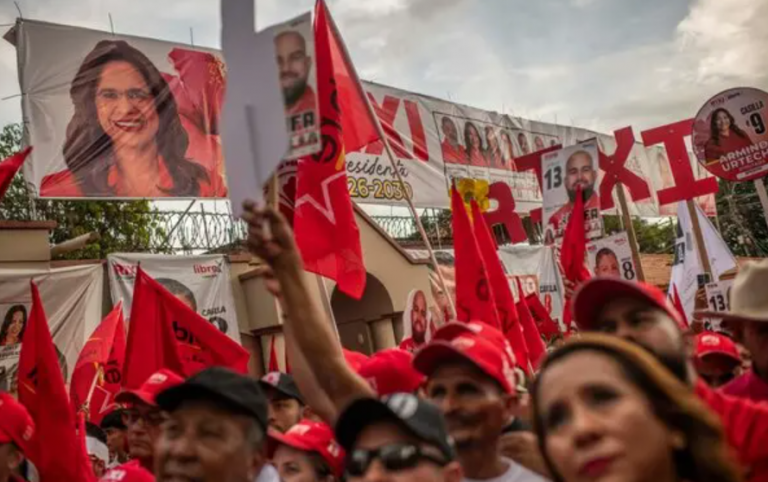
More than 6 million Hondurans went to the polls this past Sunday to elect the country’s next president in a process marked by irregularities, foreign interference, and coup attempts by the far right. Pre-election polls showed a wide lead for the candidate of the ruling Libre party, Rixi Moncada. However, today Honduras marks three days without knowing its president-elect, amid technical failures and an extremely tight count that keeps conservative candidates Nasry Asfura and Salvador Nasralla in a technical tie, in what Moncada describe as an electoral plot.

Honduran Elections 2025 Preliminary Results Released

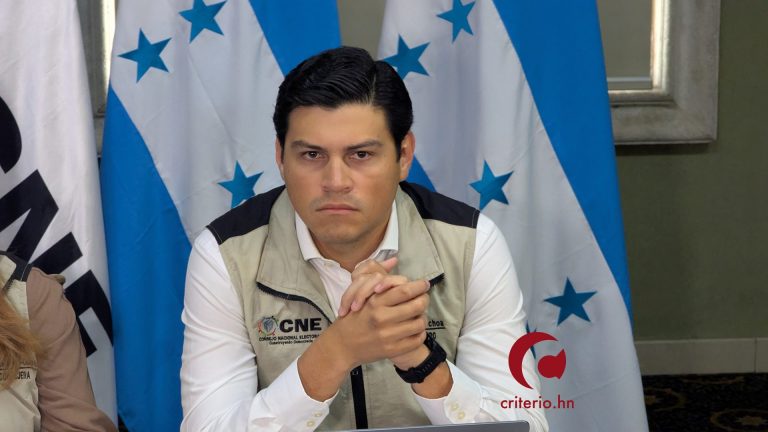
Honduran National Electoral Council released its first preliminary results after closing ballot boxes, but the Freedom and Refoundation Party quickly raised fraud alarms. The electoral day on November 30 in Honduras culminated with the National Electoral Council‘s disclosure of initial preliminary presidential results. These figures, representing 34.25% of processed ballots, immediately stirred intense nationwide expectation. Pre-election polls focused on the candidacies of former Defence Minister Rixi Moncada (FREE Party, LIBRE in Spanish) and the right-wing contenders: former Tegucigalpa Mayor Nasry Asfura (National Party) and television host Salvador Nasralla (Liberal Party).

Don’t Believe The Simulated Coup D’État In Guinea-Bissau

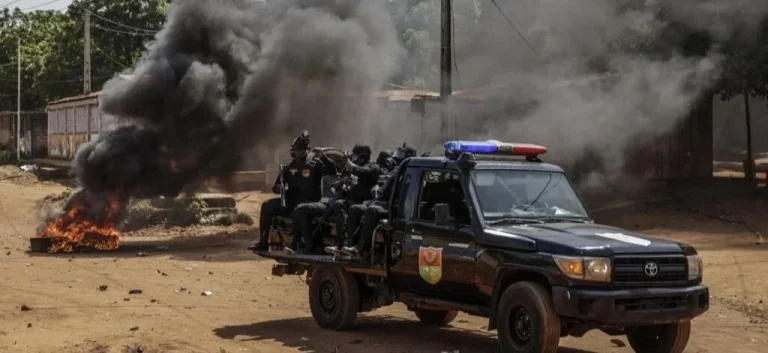
It is important that African (Black) people around the world not fall for the latest amateurish attempt by the neo-colonialist puppet government in Guinea-Bissau, led by President Umaro Sissoco Embaló, to subvert the democratic will of the Bissau-Guinean people. Before completing the country’s November 23rd election process, military leaders loyal to Embaló suspended it and seized “total control” of the country, claiming to have done so to prevent election manipulation. The Black Alliance for Peace’s (BAP) Africa Team and U.S. Out of Africa Network (USOAN) unite with the assessments and positions of our member organizations.

Interfering In The Interference: Trump, WOLA And Honduran Elections

Trump’s surprise promise to pardon convicted drug trafficker and former Honduran president Juan Orlando Hernández on the eve of today’s Honduran presidential election, in combination with his directive to Hondurans earlier in the week that they vote for Hernández-allied candidate Nasry Asfura Zablah have interfered with the carefully planned interference already underway in Washington. While Trump prefers the brutish approach that succeeded in keeping his friend Milei in control in the recent Argentinian election, other Washington actors have long maintained a different approach to regime change of coordinated messaging between politicians and organizations across the political spectrum to give the appearance of an unbiased shared concern based in human rights and democracy.

Candidate Rixi Moncada Accuses Electoral System Of Being Hacked

During closing campaign events this weekend, Moncada—the official LIBRE presidential candidate—accused the Preliminary Electoral Results Transmission System (TREP) of being “hacked” by the country’s two-party establishment in an effort to “steal the elections” scheduled for Nov. 30. According to Moncada, a plan is underway to insert pre-fabricated voting records into the TREP system to manipulate preliminary results. In response, she urged party members to remain mobilized and actively defend the vote. She called on poll workers to photograph each tally sheet submitted to TREP and retain a physical copy of the official closing tally sheet as irrefutable proof.

US Interference Threatens Electoral Integrity In Honduras

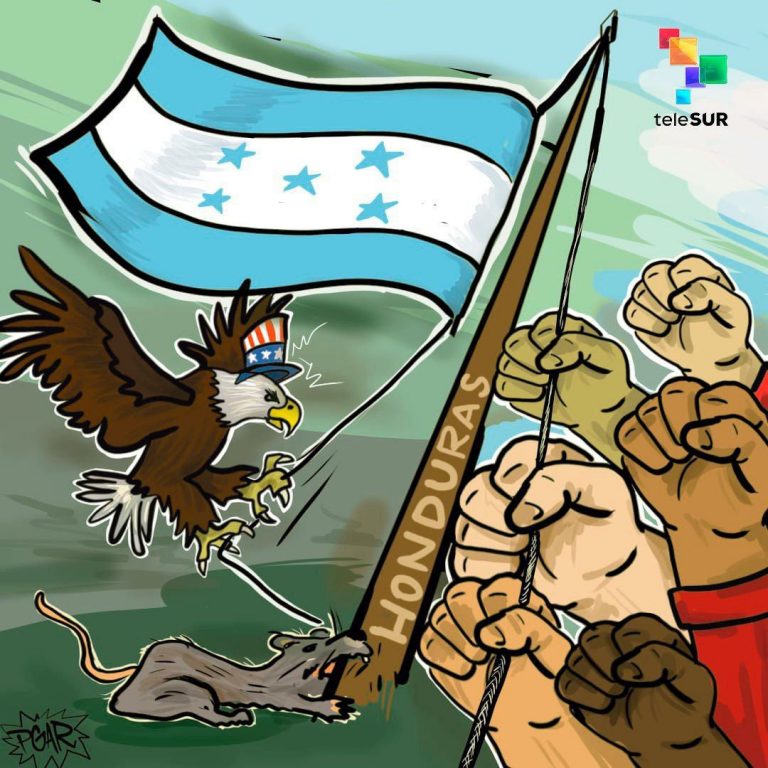
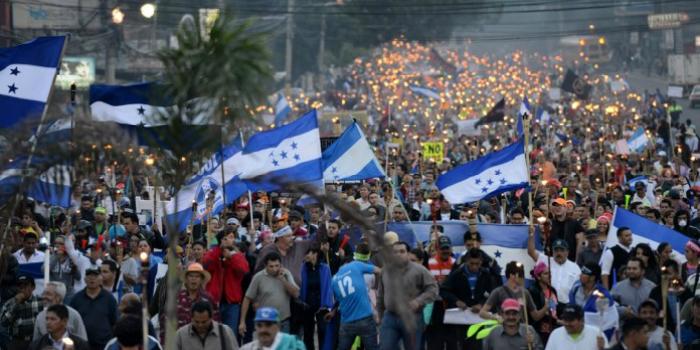
As Honduras approaches its 30 November general election, troubling signs have emerged of a coordinated effort to distort, delegitimize, and ultimately interfere in the country’s sovereign democratic process. Yesterday, many Honduran political figures — including presidential candidate Salvador Nasralla and numerous members of the Honduran National Congress — attended a Western Hemisphere Subcommittee hearing in the United States Congress chaired by Representative María Elvira Salazar, a far-right proponent of US intervention in Latin America.

Ecuador: Clear Response From The People To The Fascist Noboa

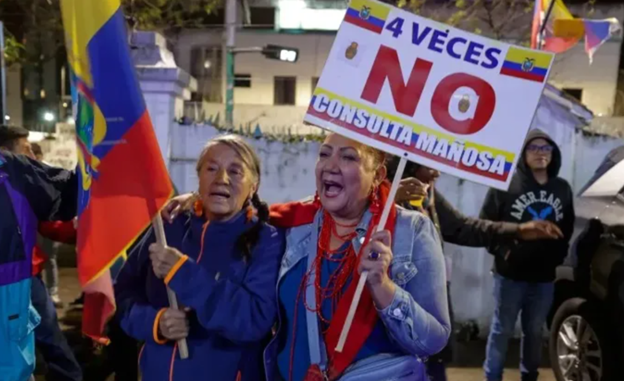
The results of the popular consultation and referendum in Ecuador, held this Sunday, gave a clear advantage to the “No” option on the four key questions promoted by the government of US backed President Daniel Noboa, in a day characterized by high citizen participation. The initiatives promoted by President Noboa, supposedly focused on “protecting national sovereignty”. According to data from the National Electoral Council (CNE), with more than 90% of the votes counted, the “No” vote exceeds 52% of the votes. This rejection is concentrated on the proposals to allow the installation of foreign military bases, eliminate state funding for political parties, reduce the number of assembly members, and convene a Constituent Assembly.

Africa’s Recent Elections: Crisis And A Continent’s Youth In Revolt

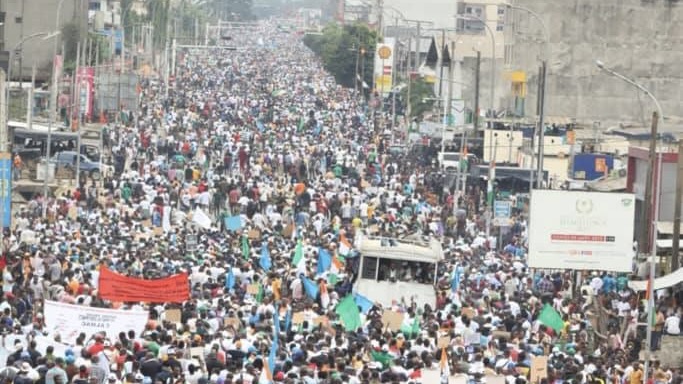
The past few months have seen three elections across Africa, in Tanzania, Cameroon, and Côte d’Ivoire. Each exposed a deepening democratic crisis on the continent. While the ballot boxes were filled and the slogans of “stability” and “unity” were loudly proclaimed, the underlying reality was very different; repression, exclusion, and a profound disconnect between the political class and the masses, especially youth. In all three cases, aging leaders clung to power through electoral processes that were anything but democratic.

The Quiet Plot To End Progressive Government In Honduras

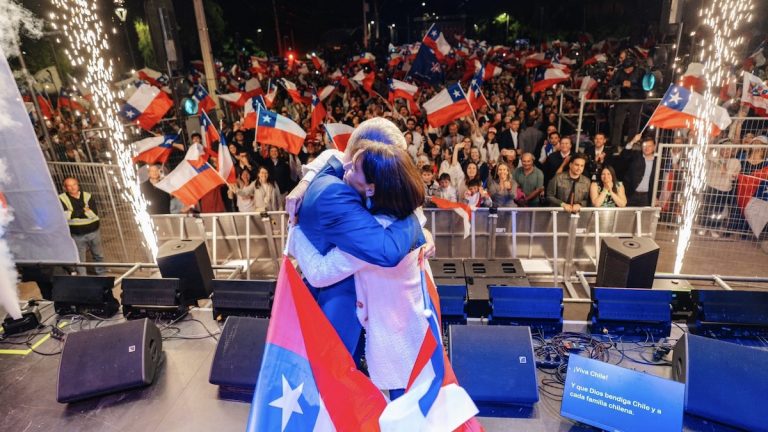
Trump’s gunboat diplomacy in the Caribbean grabs the headlines, while quieter moves to destabilize other progressive Latin American governments go unnoticed by corporate media. A key case is a plot that would create chaos enabling a neoliberal candidate to be declared victor, with Washington’s connivance, in Honduras’s elections on November 30. At stake is four more years of progressive government or – otherwise – returning to the neoliberalism that prevailed after the US-backed military coup in 2009. The electoral defeat of progressive parties in Ecuador and Bolivia earlier this year, and the uncertain chances of progressive candidate Jeannette Jara in Chile’s elections this month and next, mean that Honduras is a crucial test.

Catherine Connolly Wins: An Historic Victory For The left In Ireland

The combined forces of the political and media establishment threw everything they could at Connolly to try to stop the momentum behind her campaign. “Smear the bejaysus out of her”, as Ivan Yates [1] suggested, was the strategy deployed. Her trip to Syria, her employment of a Republican convicted of a gun crime, her comments in opposition to US, French and British imperialism, as well as her previous work as a barrister, were all endlessly scrutinised and picked over. The red thread running through the majority of the smears was the fact that she is out of touch with the political and media establishment in her defence of neutrality and opposition to aligning more and more openly with NATO.

Mass Mobilizations Needed To Protect Bolivian And Venezuelan Revolutions

On August 17, in the Bolivian presidential elections, the leftwing candidates lost for the first time in twenty years. Some are calling this a continuation of the US-backed coup there. Just days before the election, the Trump administration announced that it was sending naval destroyers and 4,000 troops to Latin America that could be used in 'targeted strikes' against Venezuela. Clearing the FOG speaks with William Camacaro, a senior analyst for the Council on Hemospheric Affairs and a co-founder of the Venezuela Solidarity Network, about divisions within the left in Bolivia that led to their current demise and how Venezuela is mobilizing millions of civilians to defend their sovereignty against US aggression.

Beyond Defeat In Bolivia: Limits Of Left Electoral Strategy In Latin America

Bolivia’s left lost big in Sunday’s election, and a lot of the analysis in progressive circles has focused solely on the feud between former president Evo Morales and sitting president, Luis Arce. Morales was barred from running in the elections by Arce’s government and subsequently called for a null or blank vote in the contest. On Sunday, August 17, two right-wing candidates, Rodrigo Paz and Jorge Quiroga, emerged victorious, and they will proceed to the second round in October. The feud between the two former comrades definitely played a factor in the demise of the once-vibrant and electorally successful party, MAS (Movement Towards Socialism). But the real story and the bigger lesson for the Latin American left is about more than just political rivalries. The roots of this defeat are deeper.

Five Myths About The Crisis Of The Left In Bolivia

I have read with great attention many comrades, people whom I love and respect a lot, simplifying the situation of the crisis of the left in Bolivia. I know that these criticisms come from honest people, born out of genuine concerns and solidarity with the Bolivian people. However, a series of common points emerge that deserve an explanation, given the unique characteristics of Bolivia, its social movements, and its left. It is not egos, lack of generosity, or meanness that marked the break between the social movements and the government of Luis Arce. This is a reductionism that hides a lack of understanding of what the MAS, the political instrument of the social organizations that came to conquer political power in Bolivia in December 2005, means.

US Counterinsurgency Wins In Bolivia

On Sunday August 17, 2025, the first round of presidential elections in the Plurinational State of Bolivia were held in the small Andean nation of 12 million people. Now the country is headed to an October 19 run-off between centrist Christian Democratic Party Senator Rodrigo Paz, the son of a former president, and former right wing President Jorge “Tuto” Quiroga of the Libre Party. The election results on Sunday ended twenty years of MAS-IPSP (Movement Towards Socialism - Political Instrument for the Sovereignty of the People) in power with MAS candidate and current Interior Minister Eduardo del Castillo polling at between 1-2%, effectively completing the objectives of the 2019 coup. 
assetto corsa mods

Urgent End Of Year Fundraising Campaign

Online donations are back! Keep independent media alive. 

Due to the attacks on our fiscal sponsor, we were unable to raise funds online for nearly two years.  As the bills pile up, your help is needed now to cover the monthly costs of operating Popular Resistance.

Urgent End Of Year Fundraising Campaign

Online donations are back! 

Keep independent media alive. 

Due to the attacks on our fiscal sponsor, we were unable to raise funds online for nearly two years.  As the bills pile up, your help is needed now to cover the monthly costs of operating Popular Resistance.

Sign Up To Our Daily Digest

Independent media outlets are being suppressed and dropped by corporations like Google, Facebook and Twitter. Sign up for our daily email digest before it’s too late so you don’t miss the latest movement news.