Skip to content

Debt

The Deficit Is Not An Economic Problem; It’s A Political Weapon

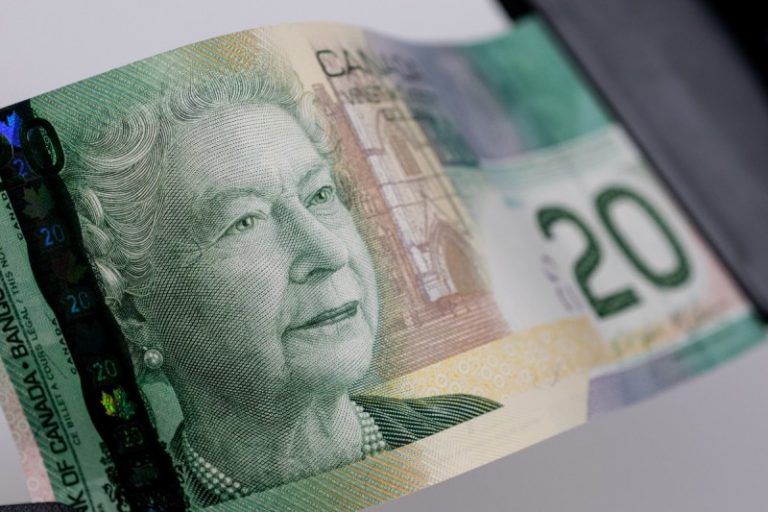
Mark Carney’s long-anticipated investment-austerity budget has finally been tabled before Parliament and it’s set to raise the deficit to $78 billion. While the details of the budget will be debated over the coming weeks, the big picture is that the prime minister delivered on his promises: expanded defence and infrastructure spending “offset” by more than $50 billion in cuts and other savings. For months Carney has been laying the groundwork for these moves, making high-profile statements about Canada’s supposed spending problem and promising to discipline government workers in order to restore fiscal sanity.

How A Fed Overhaul Could Eliminate The Federal Debt Crisis

There has been considerable discussion in recent years about reforming, modifying, or even abolishing the Federal Reserve. Proposals range from ending its independence, to integrating its functions into the U.S. Treasury Department, to dismantling it and returning monetary policy to direct congressional or Treasury oversight.  The Federal Reserve Board Abolition Act (H.R. 1846 and S. 869, 119th Congress, 2025-2026), introduced by Rep. Thomas Massie in the House and Sen. Mike Lee in the Senate on March 4, 2025, calls for abolishing the Fed’s Board of Governors and regional banks within one year of enactment, liquidating Fed assets and transferring net proceeds to the Treasury.

How The World Can Free Itself From US Financial Colonialism

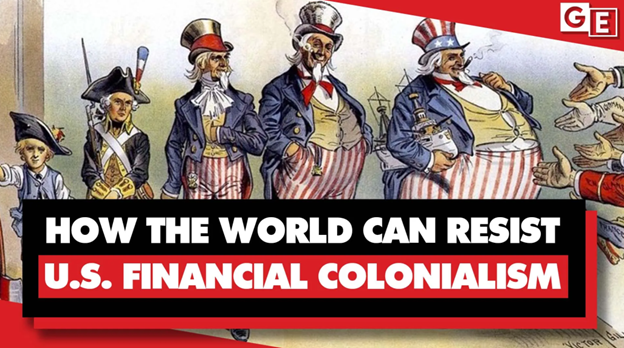
We are all living in a time of great change. There are massive geopolitical shifts happening in the world today, and we see the rise of new organizations like BRICs, which now represents more than 50% of the global population. The 20 countries of the extended BRICS+ now also make up more than 40% of world GDP, when measured at purchasing power parity (PPP). These new Global South-led organizations like BRICS represent the Global Majority. But there’s still a problem, which is that the most powerful international organizations today are largely dominated by the United States and the Western powers. This includes institutions like the International Monetary Fund (IMF) or the World Bank. These are organizations where the U.S. is the only country on Earth that has veto power.

Can The Poorer Nations Build A New Architecture For Development And Sovereignty?

A horrifying statistic hovers over the poorer nations: 3.4 billion people now live in countries that spend more on interest payments for public debt than on education or health. In 2024, according to a new report from the United Nations Conference on Trade and Development (UNCTAD), global public debt reached $102 trillion – a third of which is held by developing countries. The impact on these countries is especially severe: credit markets charge poorer nations far higher interest rates than they do richer nations, making debt servicing payments proportionately higher for the Global South.

Financing For Development Forum Plants The Seeds Of Debtor Unity

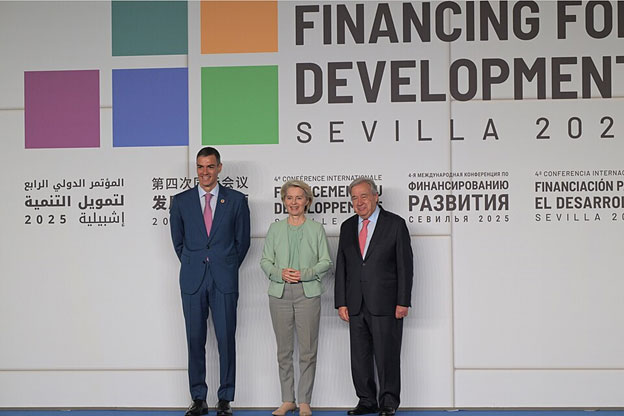
UN Member States adopted the ‘Compromiso de Sevilla’ at the Fourth Financing for Development Forum (FfD4) which concluded July 3– the culmination of months of contentious negotiations that pitted wealthy nations against the developing world in competing visions for reform of the global economic architecture. The wide-ranging outcome document will be met with both fanfare — from the host countries and UN officials keen to portray the process as a success — and criticism — from civil society groups lamenting the watering down of material commitments into so many toothless words.

The International Monetary Fund Underdevelops Africa

At the start of 2025, Sudan registered an alarming debt-to-GDP (Gross Domestic Product) ratio of 252%. This means that the country’s total public debt is 2.5 times the size of its entire annual economic output. It is not hard to understand why Sudan is in such dire straits: as we outlined in last week’s newsletter, the country has been engulfed in a conflict for decades, which has severely disrupted any possibility of economic growth and financial stability. Yet, in a way, Sudan – one of the richest countries in terms of resources but poorest in terms of household income and wealth – is also representative of what has been happening on the African continent.

President Trump’s Proposal To Eliminate Income Taxes: Can It Be Done?

In February, President Trump said that tariffs would generate so much income that Americans would no longer need to pay income taxes. The latest plan, according to U.S. Commerce Secretary Howard Lutnick, is to abolish income taxes for people who earn less than $150,000 yearly. That move would affect roughly 75% of workers, according to U.S. Census Bureau data. On its face, this could narrow the wealth gap by boosting disposable income for low- and middle-income households without raising taxes on the wealthy — a politically clever alternative to progressive tax hikes.

Imagine You Are A Poor Nation, Trapped By Debt And Strangled By Climate Change

Imagine you are a low-income country. You suffer from a heavy debt burden. You’ve been trying to catch up to the more affluent countries for decades, but you’ve been unsuccessful, mainly because of that debt hanging around your neck like a giant millstone. And you are spending more and more of your precious resources dealing with the effects of climate change, from rising waters to superstorms, a crisis that you played only a small part in creating in the first place. You face a terrestrial version of the three-body problem. These three “bodies”—debt, development, and climate change—impact your country in difficult-to-predict ways.

200 Hundred Years Ago, France Strangled Haitian Revolution With Inhumane Debt

On a stormy August night in 1791, Dutty Boukman (1767–1791) and Cécile Fatiman (1771–1883) conducted a Vodou ceremony at Bois Caïman in northern Saint-Domingue, in the French-owned part of Hispaniola. Boukman was captured in Senegambia (now Senegal and The Gambia), and Fatiman was the daughter of a woman from the Congo (as Aimé Césaire wrote) and a man from Corsica. Their ceremony amidst over two hundred enslaved Africans was the catalyst for a mass uprising across the French plantations. Boukman, in Kreyòl, spoke words that were passed down through memory for generations and eventually entered the history books.

France Must Compensate Haiti

April 17, 2025 marked two centuries since one of the most unjust episodes in modern history: the forced collection of an illegitimate debt that France imposed on Haiti as a condition for recognizing its independence. On April 17, 1825, King Charles X signed an ordinance forcing the nascent republic to pay 150 million gold francs – equivalent to about USD 21 billion today – plunging the country into a cycle of poverty, dependence, and violence that continues to this day. Amid an unprecedented humanitarian and political crisis, social organizations, political parties, and human rights defenders from Latin America and the Caribbean have submitted letters to French embassies demanding historical reparations.

Haiti And The Global Movement For Reparations

Since November 11th travel to and from Haiti has become difficult. A shooting at the capital’s airport triggered an immediate ban by the US government on all US flights. Our border with the Dominican Republic has been closed for over a year. International travel from Port-au-Prince involves either a 6-7 hour bus ride to Cape Haitian or a 40-minute helicopter shuttle that can run up to 2,500 US dollars. From there a local airline flies to Miami – at a significantly increased ticket price. The country is facing an extraordinary situation. The capital (and some provinces) are under siege by heavily armed paramilitary forces. They are responsible for an untold number of killings, kidnapping, rapes, acts of arson and pillage.

Militarizing The Ledger, Colonizing The Future

When we begin to examine U.S. hegemony, the Military-Industrial Complex often serves as the shorthand for understanding the entangled relationship between investment capital, militarism, neocolonial extraction, and unipolar power. But to truly unravel this system, we must look deeper into how the Military-Debt Nexus is legitimized—not only through ideological alignment or geopolitical pressure, but through institutional mechanisms such as trade agreements, national accounting rules, and debt-financed militarization. The intersection between military expenditure and global trade is not incidental; it forms the core infrastructure of compliance and control, shaping everything from resource acquisition to sanctions enforcement, all under the veil of economic normalcy.

McKinley Or Lincoln? Tariffs Vs. Greenbacks

President Trump has repeatedly expressed his admiration for Republican President William McKinley, highlighting his use of tariffs as a model for economic policy. But as critics note, Trump’s tariffs, which are intended to protect U.S. interests, have instead fueled a stock market nosedive, provoked tit-for-tat tariffs from key partners, risk a broader trade withdrawal, and  could increase the federal debt by reducing GDP and tax income.  The federal debt has reached $36.2 trillion, the annual interest on it is $1.2 trillion, and the projected 2025 budget deficit is $1.9 trillion – meaning $1.9 trillion will be added to the debt this year. It’s an unsustainable debt bubble doomed to pop on its present trajectory.

Puerto Rico Protests Against Higher Education Cuts

This February, President Luis A. Ferrao Delgado of the University of Puerto Rico resigned after attempting to suspend 64 educational programs. The measure targeted core disciplines such as history, philosophy and comparative literature, stunning the university community and provoking bitter opposition. Eleven days of protests followed, compelling Ferrao to reverse the decision before stepping down. The university showdown is the latest chapter in a two-decade struggle against austerity, as Puerto Rico grapples with a debt crisis and economic stagnation.

Javier Milei Deepens Argentina’s IMF Debt Trap With ‘Emergency’ Loan

Argentina’s President Javier Milei is a self-declared libertarian and “anarcho-capitalist” who has completely subordinated his country to the United States. In a previous article, Geopolitical Economy Report showed how Argentina’s real economy is in severe crisis under Milei. 53% of the population is in poverty, and manufacturing and construction are collapsing amid rapid deindustrialization. However, the stock market has boomed, enriching Milei’s oligarch backers — although even the financial sector took a hit after Milei promoted a crypto scam that caused thousands of his own supporters to lose millions of dollars.
assetto corsa mods

Urgent End Of Year Fundraising Campaign

Online donations are back! Keep independent media alive. 

Due to the attacks on our fiscal sponsor, we were unable to raise funds online for nearly two years.  As the bills pile up, your help is needed now to cover the monthly costs of operating Popular Resistance.

Urgent End Of Year Fundraising Campaign

Online donations are back! 

Keep independent media alive. 

Due to the attacks on our fiscal sponsor, we were unable to raise funds online for nearly two years.  As the bills pile up, your help is needed now to cover the monthly costs of operating Popular Resistance.

Sign Up To Our Daily Digest

Independent media outlets are being suppressed and dropped by corporations like Google, Facebook and Twitter. Sign up for our daily email digest before it’s too late so you don’t miss the latest movement news.