Skip to content

Privacy

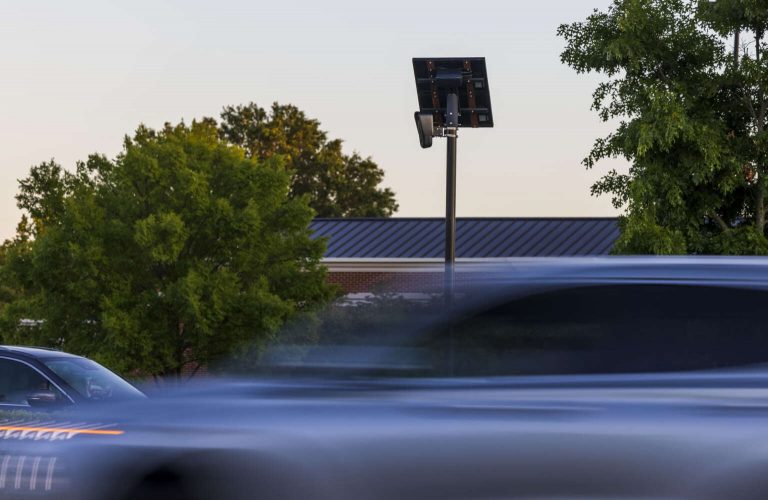
Camera System Feeds Information To Police On Drivers Nationwide

The United States public has been treated to round after round of revelations disclosing that our actions — public and private, digital and physical, criminalized and legal — are tracked and surveilled in a bevy of ways. New realms of egregious privacy violations and excesses continue to be regularly broached by corporations and police. One of the most concerning contemporary cases is that of the AI-enabled security camera start-up Flock Safety, which, by surveilling enormous expanses of public terrain and facilitating the tracking of innocent individuals, is both testing the limits of warrantless dragnet surveillance and indulging in extremes of vacuous start-up hype and negligent absurdity.

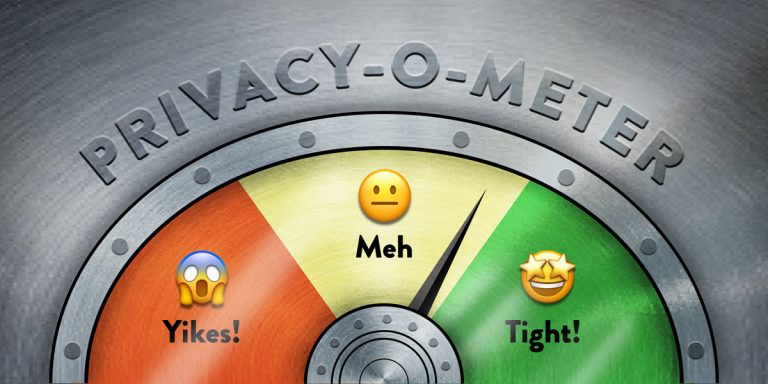
Daily Tips To Protect Your Privacy And Security

Trying to take control of your online privacy can feel like a full-time job. But if you break it up into small tasks and take on one project at a time it makes the process of protecting your privacy much easier. This month we’re going to do just that. For the month of October, we’ll update this post with new tips every weekday that show various ways you can opt yourself out of the ways tech giants surveil you. Online privacy isn’t dead. But the tech giants make it a pain in the butt to achieve. With these incremental tweaks to the services we use, we can throw sand in the gears of the surveillance machine and opt out of the ways tech companies attempt to optimize us into advertisement and content viewing machines.

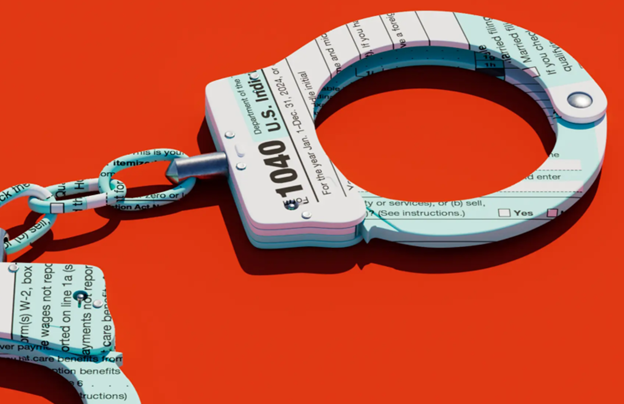
The IRS Is Building A Vast System To Share Taxpayers’ Data With ICE

The Internal Revenue Service is building a computer program that would give deportation officers unprecedented access to confidential tax data. ProPublica has obtained a blueprint of the system, which would create an “on demand” process allowing Immigration and Customs Enforcement to obtain the home addresses of people it’s seeking to deport. Last month, in a previously undisclosed dispute, the acting general counsel at the IRS, Andrew De Mello, refused to turn over the addresses of 7.3 million taxpayers sought by ICE. In an email obtained by ProPublica, De Mello said he had identified multiple legal “deficiencies” in the agency’s request.

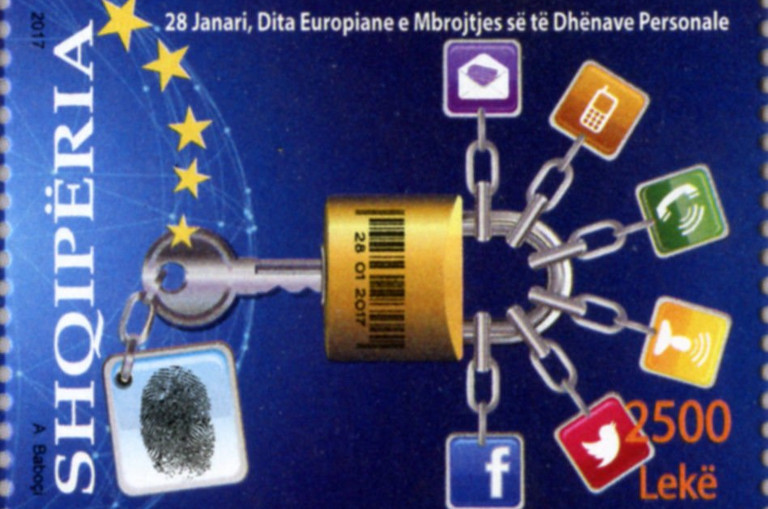
Denmark Takes First Step Toward Owning Your Own Information

Denmark has decided to take the first step toward protecting Danes’ personal information by giving them ownership rights to their own image and voice. The Danish culture minister told The Guardian: “In the bill we agree and are sending an unequivocal message that everybody has the right to their own body, their own voice and their own facial features, which is apparently not how the current law is protecting people against generative AI.” The purpose is to prevent “deep fakes” of an individual and to force such “deep fakes” to be taken down when an individual requests it. Under the law those violating it may have to pay compensation.

Department Of Homeland Security Targets Black Muslim Activist

On Tuesday, April 8, I was unlawfully detained and interrogated by U.S. Customs and Border Protection (CBP) at the Tampa airport while returning to the United States from international travel. I was told that “most of your rights are suspended,” because “this airport is a border crossing,” including my right to a lawyer. I was interrogated by a counterterrorism agent and treated like a criminal and a terrorist — synonyms this empire has long made interchangeable with being Black, Muslim and politically active. For roughly over three hours I was held without access to legal counsel, aggressively questioned, patted down and subjected to an invasive groin search.

Wiz Acquisition Puts Israeli Intelligence In Charge Of Google Data

Google recently announced it would acquire Israeli-American cloud security firm Wiz for $32 billion. The price tag — 65 times Wiz’s annual revenue — has raised eyebrows and further solidified the close relationship between Google and the Israeli military. In its press release, the Silicon Valley giant claimed that the purchase will “vastly improve how security is designed, operated and automated—providing an end-to-end security platform for customers, of all types and sizes, in the AI era.” Yet it has also raised fears about the security of user data, particularly of those who oppose Israeli actions against its neighbors, given Unit 8200’s long history of using tech to spy on opponents, gather intelligence, and use that knowledge for extortion and blackmail.

Journalist Could Face Prison For Refusing To Give Passwords To Police

It is an unprecedented case. And it risks triggering an unprecedented threat to journalism. The UK police have repeatedly tried to obtain the passwords to the phones of the British independent journalist, Richard Medhurst, the first reporter arrested in London under Section 12: his analyses and comments on Israel’s bloodbath in Gaza – which Amnesty International has characterised as genocide – have been interpreted by the police as support for organisations banned from the UK, such as Hamas and Hezbollah. The son of two UN peacekeepers, Medhurst was arrested last August at London’s Heathrow Airport

Cellphone Seizures And The Courts

After years of conflicting decisions by federal district courts across the country on whether Customs and Border Protection (CBP) agents can search your cell phone and laptop at ports of entry, the Seventh Circuit Court of Appeals has ruled that, “the routine inspection and search of a traveler’s electronics, or for that matter, any other type of property, at the border may be conducted without a warrant, probable cause, or even individualized suspicion of wrongdoing.” In reaching the decision, the court agreed with several other circuit courts, but put itself at odds with others and many (lower) federal district courts around the country.

Chris Hedges Report: Surveillance Education

Surveillance tools have become ubiquitous in schools and universities. Technologies, promising greater safety and enhanced academic performance, have allowed Gaggle, Securly, Bark, and others to collect detailed data on students. These technologies, however, have not only failed to deliver on their promises, but have eviscerated student privacy. This is especially true in poor communities, where there is little check on wholesale surveillance. This data is often turned against students, especially the poor and students of color, accelerating the school-to-prison pipeline. When students and teachers know they are being watched and monitored it stifles intellectual debate, any challenging of the dominant narrative and inquiry into abuses of power.

The White House Is Wrong: Section 702 Needs Drastic Change

With Section 702 of the Foreign Intelligence Surveillance Act set to expire later this month, the White House recently released a memo objecting to the SAFE Act—legislation introduced by Senators Dick Durbin and Mike Lee that would reauthorize Section 702 with some reforms. The White House is wrong. SAFE is a bipartisan bill that may be our most realistic chance of reforming a dangerous NSA mass surveillance program that even the federal government’s privacy watchdog and the White House itself have acknowledged needs reform.

Tell Congress: Stop The TikTok Ban

The “Protecting Americans from Foreign Adversary Controlled Applications Act” would give the President the power to designate an application under the control of a country considered adversarial to the U.S. to be a national security threat. TikTok would be deemed a threat, meaning that the application would effectively be banned unless it cuts all ties with the foreign adversarial country within 180 days through a forced sale. The same could be true for other applications, like WeChat. It’s a massive problem that current US law allows for all the big social media platforms to harvest and monetize our personal data, including TikTok.

US Government Treats Use Of Privacy Tools As Criminal Activity

In Espionage Act prosecutions involving leaks, attorneys at the United States (DOJ) consistently treat the use of privacy tools as evidence of criminality. This tendency should alarm journalists and news media organizations that rely on such tools for newsgathering. A jury convicted former CIA programmer Joshua Schulte of disclosing CIA cyber warfare materials to WikiLeaks in July 2022. Schulte is scheduled to be sentenced in the U.S. Southern District Court of New York on February 1. The U.S. government’s sentencing memo [PDF] asserted that “between April 18 and May 5, 2016, Schulte took a number of steps to transmit the stolen CIA files to WikiLeaks.

Update On Lawsuit Against Alleged CIA Spying On Assange Visitors

A United States court held an extraordinary hearing on November 16, where a judge carefully considered a lawsuit against the CIA and former CIA director Mike Pompeo for their alleged role in spying on American attorneys and journalists who visited WikiLeaks founder Julian Assange. Judge John Koeltl of the Southern District of New York pushed back when Assistant U.S. Attorney Jean-David Barnea refused to confirm or deny that the CIA had targeted Americans without obtaining a warrant. He also invited attorneys for the Americans to update the lawsuit so that claims of privacy violations explicitly dealt with the government’s lack of a warrant.

Young People Should Oppose The Kids Online Safety Act

Next week, Congress plans to move a bill forward that is opposed by dozens of organizations, digital rights protectors, LGBTQ+ activists, and human rights defenders: the Kids Online Safety Act (KOSA). As we’ve written before, KOSA would lead to censorship and privacy invasions for all social media users. But the most impacted groups will be young people, who the bill purports to help by banishing to a second-class internet. What’s often been left out of the debate over KOSA is how young people feel about this. In fact, many teenagers already oppose the bill. Young TikTok users have been rallying one another to call and email legislators to push back on the bill, and videos describing what’s wrong with KOSA have received hundreds of thousands of views.

‘Driver’s Licenses For All’ Bill A Model For Data Privacy Protections

An attorney who worked with Minnesota Democrats to craft the new ‘Driver’s Licenses For All’ bill, recently signed into law, spoke to Unicorn Riot about the bill’s privacy provisions that reportedly prevent driver data from being shared with the feds. On March 2, the Democrat-controlled Minnesota state legislature passed the “Driver’s Licenses For All” bill, restoring driving privileges to all Minnesota residents regardless of immigration status. Democratic Governor Tim Walz signed the bill into law on March 7. This legislation comes after a 20-year struggle. In 2003, GOP Governor Tim Pawlenty unilaterally revoked the right of some Minnesotans to obtain a driver’s license by mandating proof of legal residency in the United States, such as a Social Security Number from applicants.
assetto corsa mods

Urgent End Of Year Fundraising Campaign

Online donations are back! Keep independent media alive. 

Due to the attacks on our fiscal sponsor, we were unable to raise funds online for nearly two years.  As the bills pile up, your help is needed now to cover the monthly costs of operating Popular Resistance.

Urgent End Of Year Fundraising Campaign

Online donations are back! 

Keep independent media alive. 

Due to the attacks on our fiscal sponsor, we were unable to raise funds online for nearly two years.  As the bills pile up, your help is needed now to cover the monthly costs of operating Popular Resistance.

Sign Up To Our Daily Digest

Independent media outlets are being suppressed and dropped by corporations like Google, Facebook and Twitter. Sign up for our daily email digest before it’s too late so you don’t miss the latest movement news.