Skip to content

Indigenous Rights

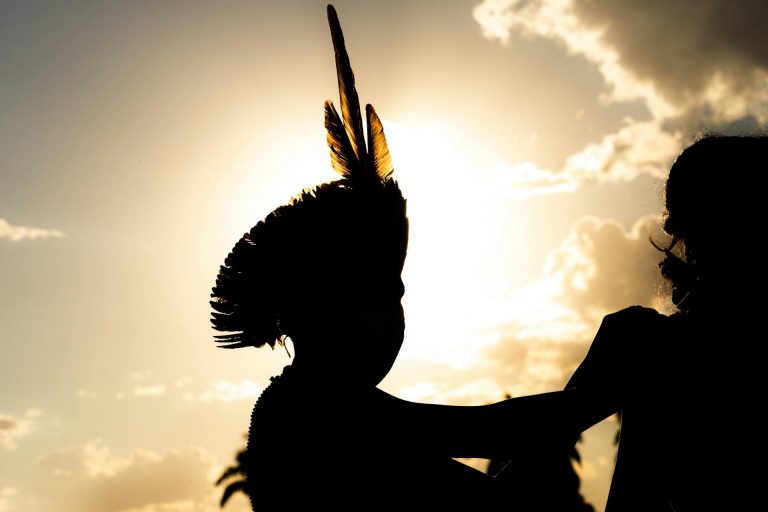
70,000 People March In Belém For Climate Justice

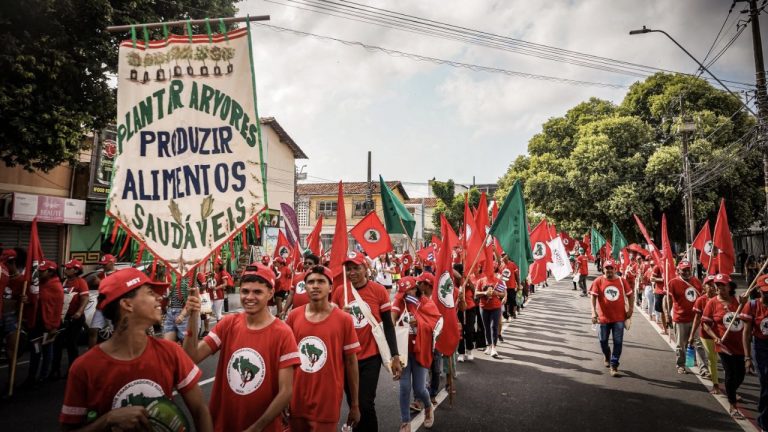
The streets of Belém were occupied, according to organizers, by more than 70,000 people on Saturday, November 15, for the historic Global Climate March. Unlike the official COP30 spaces, the march brought together the diversity of peoples and demands from civil society in defense of climate justice. With the force of the motto “We are the answer”, the tens of thousands of members of people’s movements held signs such as “Agribusiness is fire”, “There is no climate justice without popular agrarian reform” and “environmental collapse is capitalist”.

A Conversation With Leonard Peltier On His 81st Birthday

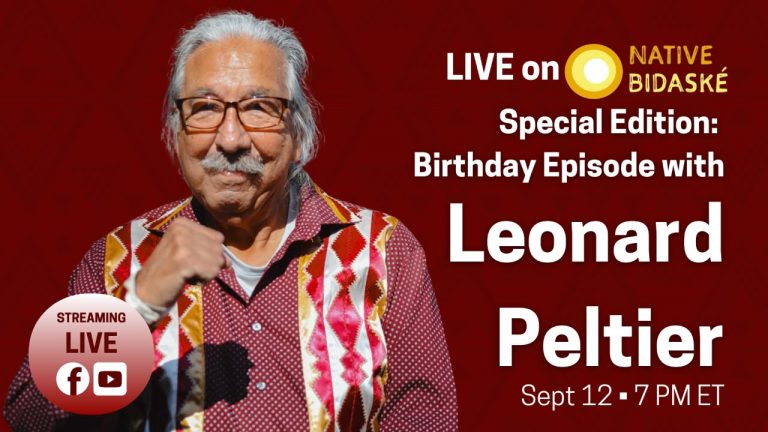
Tune in to Native Bidaské as Native News Online editor Levi Rickert talks with Leonard Peltier (Turtle Mountain Band of Chippewa Indians) who is celebrating his 81st birthday today. Released a federal prison this past February after almost five decades, it is his first birthday away from prison. In 1977, he was convicted and sentenced to two consecutive life terms for the deaths of two FBI agents during a 1975 shootout on the Pine Ridge Reservation in South Dakota — a case that has since become one of the most controversial in American legal history. On his last day in office, President Joe Biden granted Peltier a presidential commutation. Peltier was released on February 18 from a federal prison in Florida and flown to North Dakota. He is confined to his home on the Turtle Mountain Reservation.

What Is An American? Ask The People Who Were Here First

The National Museum of the American Indian — with locations in New York City and Washington, D.C. — is one of eight Smithsonian institutions under audit in accordance with President Donald Trump’s Executive Order 14253, Restoring Truth and Sanity to American History. The directive came from the White House last month in a letter to Smithsonian Institution Secretary Lonnie G. Brunch III that demanded a full audit of content — from exhibit texts and online materials to curatorial process documents and grant records. This entire process represents an effort to sanitize history by emphasizing only the positive events while ignoring negative ones.

Indigenous Stewardship Is The Ignored Climate Solution

As the world stumbles toward climate tipping points, a growing body of scientific evidence suggests that among the most powerful defenders of nature are not satellites or carbon markets, but people – Indigenous peoples. From the rainforests of the Amazon to the boreal forests of Canada, Indigenous stewardship may be one of the most high-impact and cost-effective strategies to mitigate climate change, preserve biodiversity, and disrupt environmental crimes. Indigenous peoples occupy, use, or manage over a quarter of the Earth’s surface, including many of its most ecologically intact regions. These territories often overlap with areas of high carbon density and biodiversity richness.

It’s Time To Join The Fight Against ‘Alligator Alcatraz’

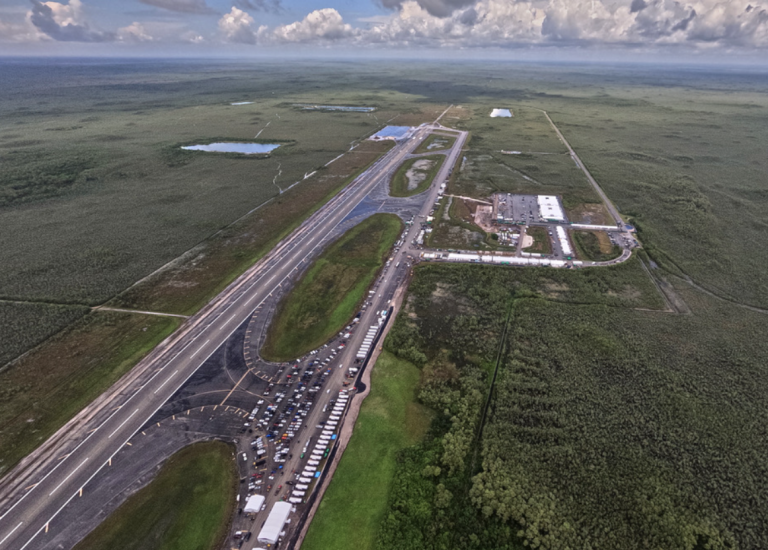
The Miccosukee Tribe has lived in Florida’s Big Cypress National Preserve since time immemorial. Today, 640 tribal members still call the Everglades home. Their ancestral home now has an unwanted neighbor: a massive immigrant detention center that sits less than 1,000 feet from Miccosukee villages. It was hurriedly built by the state with encouragement and promised funding from the Trump administration. Both ignored a basic requirement — consulting the tribe about building on their ancestral land. This isn't the first time officials have planned grandiose development in the Everglades without consulting the tribe.

20 Major Wins For Indigenous Rights In 2025

So far, 2025 has been a powerful year for Indigenous rights. Over the past 6 months we have seen many hard-fought victories and long-awaited acts of justice for Indigenous Peoples across the globe. While these wins vary in scale and geography, a common thread runs through them all: Indigenous leadership. Whether resisting oil drilling in the Peruvian Amazon, overturning mining projects in Arizona, or securing court protections for uncontacted peoples in Colombia and Ecuador, these movements reflect a resurgence of Indigenous authority in matters that directly affect their survival and future.

Trump Administration Abandons Deal With Tribes To Restore Salmon

Less than two years ago, the administration of President Joe Biden announced what tribal leaders hailed as an unprecedented commitment to the Native tribes whose ways of life had been devastated by federal dam-building along the Columbia River in the Pacific Northwest. The deal, which took two years to negotiate, halted decades of lawsuits over the harm federal dams had caused to the salmon that had sustained those tribes culturally and economically for thousands of years. To enable the removal of four hydroelectric dams considered especially harmful to salmon, the government promised to invest billions of dollars in alternative energy sources to be created by the tribes.

The Oceti Sakowin Fight To Protect A Key Sacred Site In South Dakota

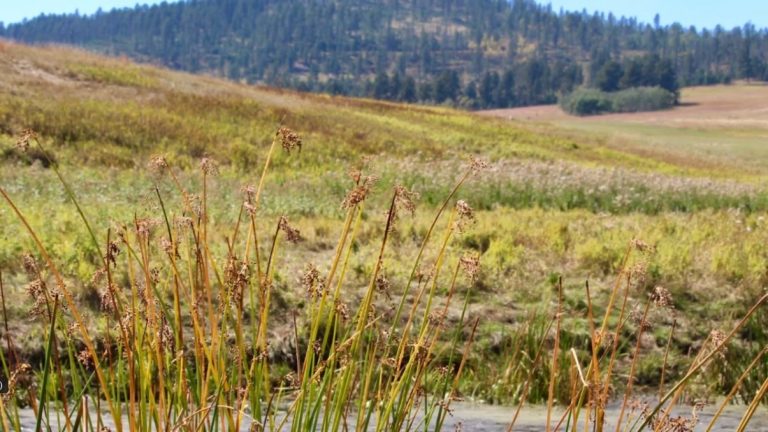
The Oceti Sakowin, also known as the Great Sioux Nation, are actively opposing a proposed exploratory drilling project on lands adjacent to the sacred site of Pe’sla in the Black Hills of South Dakota. The campaign is one of many Indigenous efforts around the world that seek to defend and reclaim ancestral lands from the extractive industry. A high-elevation meadow also known as Reynolds Prairie, Pe’sla is of deep spiritual importance to the Lakota, Nakota, and Dakota tribes, which have used it for ceremonial gatherings for thousands of years. According to Lakota oral traditions, Pe’Sla is the site of creation, “a bald spot among the pine-treed hills…where the Morning Star came down to help the people”.

Yurok Tribe Acquires 47,000 Acres In California’s Largest Land-Back Deal

The Yurok Tribe has gained control and stewardship of 73 square miles of land along the Klamath River in a $56 million transfer — the largest land-back deal in California’s history. The tribe announced on June 5 it had completed the final phase of the land-transfer partnership with Portland, Ore.-based nonprofit Western Rivers Conservancy, a process that began in 2022. With the land under their control, the Yurok have designated 15,000 acres of the 47,097-acre property as the Blue Creek Salmon Sanctuary and established the remainder as the Yurok Community Forest. “The impact of this project is enormous,” Joseph L. James, chairman of the Yurok Tribe, said in a statement. “We are forging a sustainable future for the fish, forests and our people that honors both ecological integrity and our cultural heritage.”

Land Sharing: Prairie Farmers Lead The Way

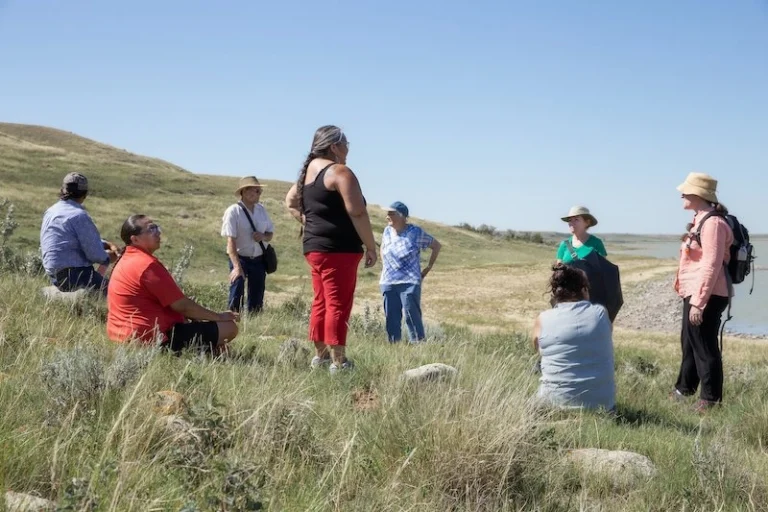
Since the final report of the Truth and Reconciliation Commission was published in 2015, with its 94 Calls to Action, much more attention has been focused on recognizing the harms of colonization. Still, many of us wonder how we can involve ourselves in reconciliation in a meaningful, sincere, way. Reconciliation means much more than setting aside a month or a day to support and learn about Indigenous history. While gestures are important, how do we apply reconciliation in our own lives? How does a settler, a farmer, whose ancestors were part of colonization, work to advocate for the treaty rights of Indigenous Peoples?

Where Spirits Weep Beneath The Snow: The Cry Against Arizona Snowbowl

On the western slope of Arizona’s highest landmark, Humphreys Peak, and approximately 4.8 miles from its 12,633-foot-tall summit, rests the skeleton of a 777-acre-wide ski resort. The Arizona Snowbowl, a piece of engineering made up of eight lifts that serve 61 runs, is beloved by some but resented by others. It’s been torn between these two sides since 1938, the year it first started serving skiers from Arizona and beyond on its groomed runs, tree-lined back bowls and terrain parks. Flagstaff meteorologist Mark Stubblefield has been riding the Snowbowl’s slopes almost every winter since 1987.

Whole Process People’s Democracy: The Path Forward

China’s political form is called ‘Socialism with Chinese Characteristics.' Chinese scholar Zhang Weiwei calls the Chinese political content ‘whole-process people’s democracy’. He distinguishes this model from the formulaic, procedure-obsessed, and anti-democratic model of the North American Republic and European social democracies. What separates the Chinese model from the political model of the central capitalist formations are a number of variables: firstly, mass participation from top to bottom is a key feature of Chinese socialism. Secondly, the subordination of the capitalist class to the party-state and thus the imperatives of the masses defines China’s ability to develop a socialist market economy.

Federal Judge Temporarily Halts Land Swap At Oak Flat Copper Mine Site

A federal judge has temporarily blocked the Trump administration from moving ahead with a plan that would allow Resolution Copper to take ownership of Oak Flat and begin extracting copper on land considered sacred to Apache and other Native peoples. Judge Steven P. Logan issued the order May 9, two days after hearing the case in U.S. District Court in Phoenix. He ruled that the government cannot publish a final environmental review of a land swap between Resolution and the U.S. Forest Service, which manages a campground at the site 60 miles east of Phoenix.

RCMP Violated Charter Rights During CGL Arrests, Court Finds

A B.C. Supreme Court decision issued yesterday is “precedent setting,” according to a lawyer for three Indigenous land defenders arrested in 2021 along the Coastal GasLink pipeline route. “The courts found the conduct of the police officers abused the court’s process. This is an extraordinarily rare finding, and it demonstrates how serious the police officers’ misconduct was,” Frances Mahon said during a press conference following the decision. “In particular, it was a rebuke to the C-IRG members who thought it was appropriate to say the most egregious, racist things about beautiful Indigenous women when they thought nobody could hear them.”

Annual March For Missing And Murdered Indigenous Women, Girls

Terrace, British Columbia - The Tears to Hope Society is organizing their annual memorial march for missing and murdered Indigenous women, girls, two-spirit, transgender and gender-diverse peoples in Terrace on Feb. 14. It is open to the public. "Feb 14 is a special day for the missing and murdered indigenous women and girls, and think it's important that people get out and acknowledge that they are going missing or being murdered, many of them unsolved murders, particularly up here on the Highway of Tears," said Gladys Radek, a Witset elder with the Tears to Hope Society.
assetto corsa mods

Urgent End Of Year Fundraising Campaign

Online donations are back! Keep independent media alive. 

Due to the attacks on our fiscal sponsor, we were unable to raise funds online for nearly two years.  As the bills pile up, your help is needed now to cover the monthly costs of operating Popular Resistance.

Urgent End Of Year Fundraising Campaign

Online donations are back! 

Keep independent media alive. 

Due to the attacks on our fiscal sponsor, we were unable to raise funds online for nearly two years.  As the bills pile up, your help is needed now to cover the monthly costs of operating Popular Resistance.

Sign Up To Our Daily Digest

Independent media outlets are being suppressed and dropped by corporations like Google, Facebook and Twitter. Sign up for our daily email digest before it’s too late so you don’t miss the latest movement news.