Skip to content

Finance and the Economy

Unable to Squeeze Another Dime From Black People, Subprime Economy Runs Aground

Among the most exploited South Africans during 48 years of white minority misrule were the vineyard workers who were often paid with daily rations of wine to supplement their pitiful wages. Known as the “dop”—Afrikaans slang for “drink”—the practice was outlawed in 1960, but it was only after voters of all races went to the polls to abolish apartheid 34 years later that the Black majority government began to enforce the ban. In late 2000, I went to South Africa’s wine-growing region in the Western Cape to interview a white attorney who had recently purchased a vineyard in the hopes of fulfilling his lifelong dream of producing award-winning wines.

From Coast To Coast, The Public Banking Movement Grows

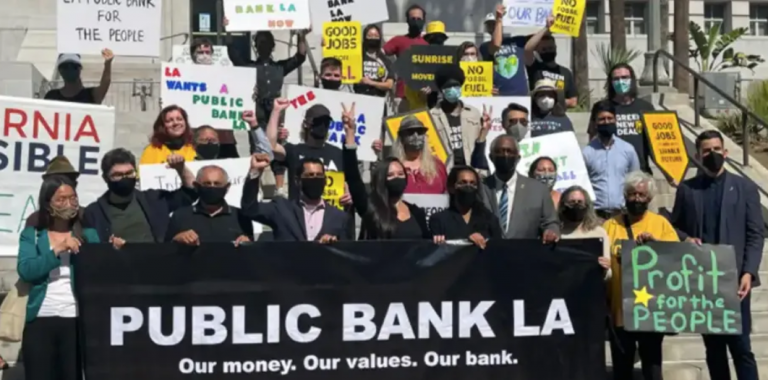
After years of being considered a niche concept, relegated to a few academic articles and zealous activists, the idea of public banking is about to hit the mainstream. From coast to coast, 2025 witnessed a blossoming of support for public banking, especially on the local level. Not only did several activist groups hold conferences to drum up support for public banking, but numerous municipalities took concrete actions to inch closer to creating their own public banks, and politicians who supported public banking achieved historic victories during the most recent election.

How A Fed Overhaul Could Eliminate The Federal Debt Crisis

There has been considerable discussion in recent years about reforming, modifying, or even abolishing the Federal Reserve. Proposals range from ending its independence, to integrating its functions into the U.S. Treasury Department, to dismantling it and returning monetary policy to direct congressional or Treasury oversight.  The Federal Reserve Board Abolition Act (H.R. 1846 and S. 869, 119th Congress, 2025-2026), introduced by Rep. Thomas Massie in the House and Sen. Mike Lee in the Senate on March 4, 2025, calls for abolishing the Fed’s Board of Governors and regional banks within one year of enactment, liquidating Fed assets and transferring net proceeds to the Treasury.

Data Centers And The AI Bubble

For the last month or so, investors, business gurus, and veritable Wolves of Wall Street have been discussing the massive–and growing–AI financial bubble. Speculative bubbles are nothing new in the American economy. The other imperialist countries in Europe are slightly insulated from this financialization, although not entirely. AI has been on the tip of everyone’s tongues for some time now, and many services–email, customer service, shopping sites, and even social media are full of AI chatbots or ‘virtual assistants’ which promise to ease your time on the web.

The AI Race: How The Surge In Data Centers Harms Us

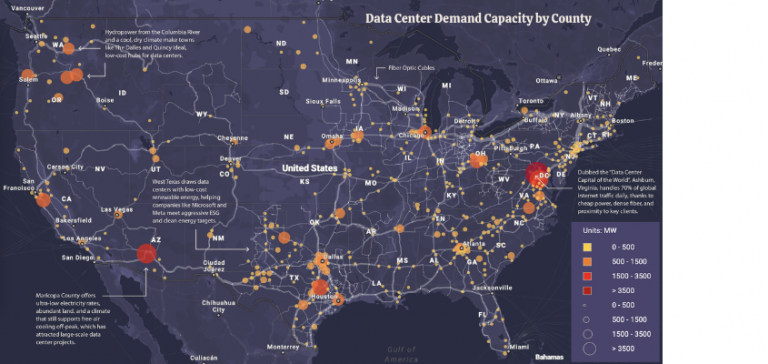
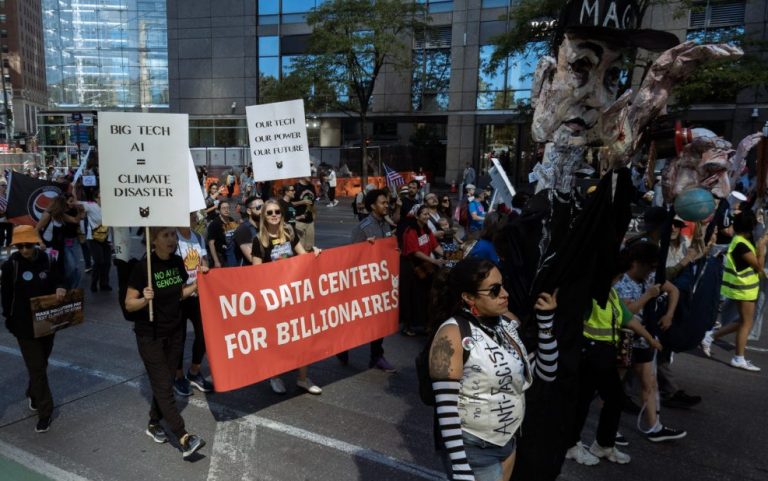
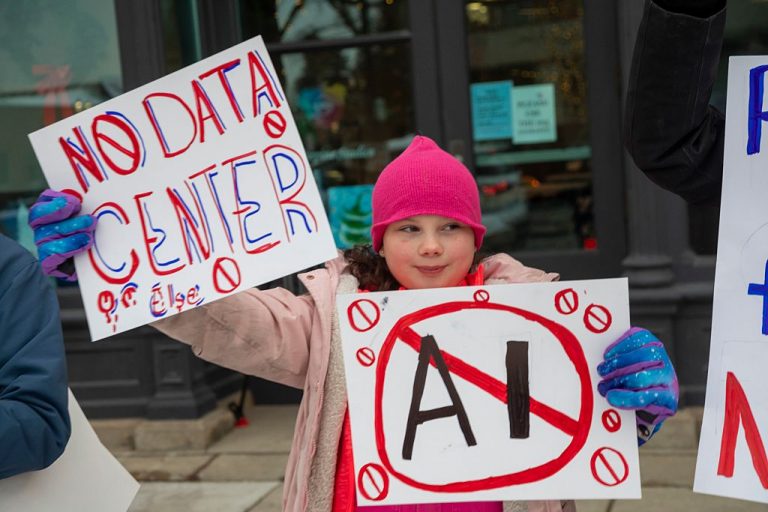
There are more than 5,400 data centers in the United States, which is almost half of the number of data centers worldwide. In the past four years, there has been a surge in data center construction, particularly in poor communities in the South. Clearing the FOG speaks with Jai Dulani of Media Justice, who authored a new report: The People Say No: Resisting Data Centers in the South, and Kali Akuno of Cooperation Jackson, about the harms that these centers are causing in local communities, particularly in their enormous consumption of water and energy, and the risk they pose to the US economy. Akuno also addresses the bigger picture of the deleterious impact of artificial intelligence on our lives.

Canadians Are On Year Three Of A People’s Recession

A new Deloitte report is projecting 1.3 percent GDP growth for Canada this year. The same report says that as long as Donald Trump keeps the CUSMA carve-outs in his tariff plan—meaning that most of the goods we export to the United States won’t face tariffs—we can look forward to 1.7 percent growth next year. This would mark a return to the growth rates we saw in 2023 and 2024. Economists seem cautiously optimistic that Canada will avoid a recession and return to a period of relative stability. This should be great news. On paper, the economy has proved its resilience in the face of serious challenges. But why then do things feel increasingly precarious?

European Union Climate Breakdown

In the sharpest possible contrast to the US approach to climate change, in a very grown-up adult fashion, the EU has publicly stated: “EU officials warn climate breakdown and wildlife loss are ruining ecosystems that underpin the economy.” Whew!!! The world is still sane. Like a cool refreshing late afternoon breeze, a great sense of relief has spread across the Continent. With a remarkable pitch-perfect admission, the EU informs its citizens of the truth no matter how much it hurts. The upside to this admission is an understanding by the citizens that something horrible is wrong. Ipso facto, they must pull together to do something about it. Definitively, this pulls everybody into the mix to be aware, be prepared, make sacrifices, if necessary, to make it right.

Could A ‘Maximum Wage’ Combat Billionaire Power?

In the first year of President Donald Trump’s second term, the power of the extremely wealthy over public policy has never been more evident. As Sen. Bernie Sanders (I-Vt.) has asserted, ​“Trump has… said it loudly and clearly: we are a government of billionaires.” The troubling extent to which we are ruled by the rich is hardly debatable. The real question is: what can we do about it? One solution that has been proposed in the past is implementing a ​“maximum wage.” Such a cap would limit the amount any individual can earn over a given period. There are a couple different ways that this limit could be accomplished. One way would be to use tax policy: We could simply levy a 100% tax rate on income over a particular level. President Franklin Delano Roosevelt proposed such a measure during his administration in the 1940s.

How To Reach Persuadable Audiences On Taxes

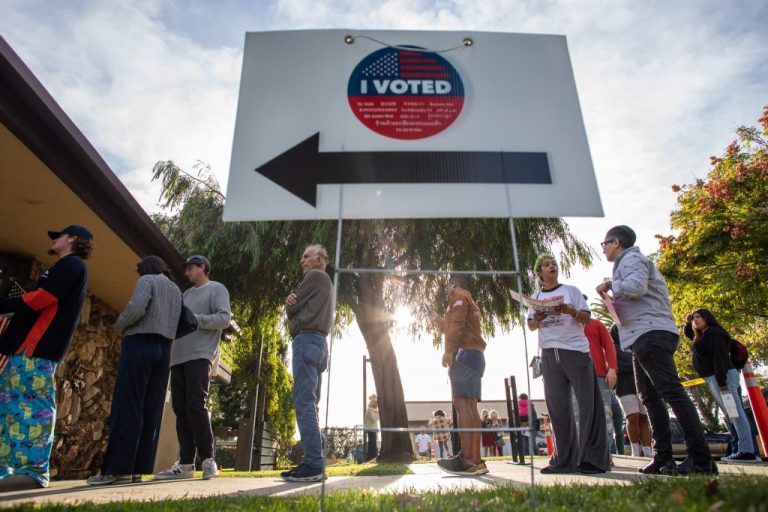
Polling has shown over and over that Americans support higher taxes on the wealthy. But when they actually get to the ballot box, they simply aren’t voting in ways that would make that happen. As advocates for an economy that would lift all people up and end extreme wealth concentration, this disconnect can feel incredibly frustrating. We at the Excessive Wealth Disorder Institute and Wonder for Good did some deep listening to better understand the disconnect between audiences’ support for change in the abstract and how they actually vote. Through in-depth, qualitative audience research and message testing, we identified strategies that consistently worked — and some that didn’t — in creating positive mindsets and support for reforming the tax code. Some of our findings may be surprising to advocates accustomed to messaging to base audiences.

Unaudited Power: The Military Budget Nobody Controls

The U.S. federal debt has now passed $37 trillion and is growing at the rate of $1 trillion every five months. Interest on the debt exceeds $1 trillion annually, second only to Social Security in the federal budget. The military outlay is also close to $1 trillion, consuming nearly half of the discretionary budget. As a sovereign nation, the United States could avoid debt altogether by simply paying for the budget deficit with Treasury-issued “Greenbacks,” as Abraham Lincoln’s government did. But I have written on that before (see here and here), so this article will focus on that other elephant in the room, the Department of Defense. Under the Constitution, the military budget should not be paid at all, because the Pentagon has never passed an audit.

Corporate Landlords Are Taking Over Society, Making Life Unaffordable

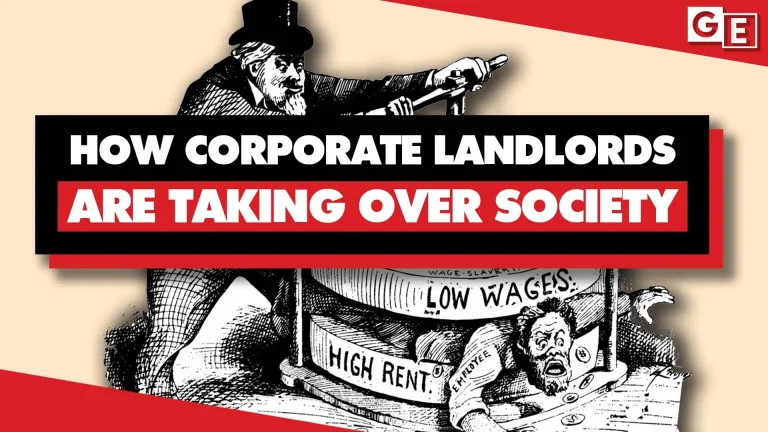
Landlords are taking over society. For many average working people, it has become impossible to buy a house. And the cost of renting housing has become prohibitively expensive. This problem is especially bad in the United States. But it’s not only a problem in the US; it’s a problem in many countries around the world — especially in Western countries in North America and Europe, whose economies have become financialized. In the United States, for instance, the largest landlord is not an individual; it’s a massive Wall Street investment firm: Blackstone, the private equity fund. Blackstone owned more than 300,000 rental housing units in the US as of 2023. The number has only increased since then. Blackstone and other Wall Street investment funds have been gobbling up residential housing. Then they ratchet up the cost of rent, which has fueled homelessness, as many people are being evicted from their homes.

America’s 25-Year Tax Cutting And Fiscal Train Wreck

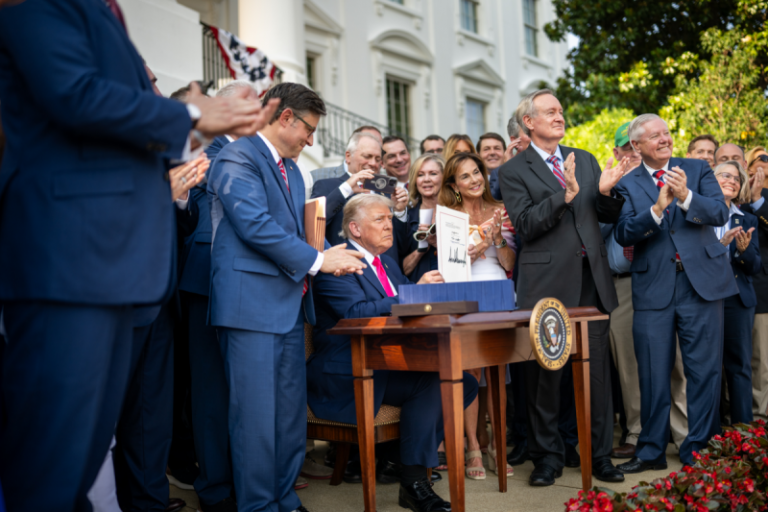
On July 4, the US Congress passed Donald Trump’s One Big Beautiful Bill Act—or BBB for short. The mainstream media and economists have mostly been reporting the details of the tax cuts contained in the bill—that is, which taxes got cut, how much accrued to businesses and the wealthy as opposed to the rest of us, what the impact is on GDP, and maybe even on government deficits and debt. All interesting facts. But not the most important. They purposely ignore the cuts in historical perspective and the bigger picture they represent.

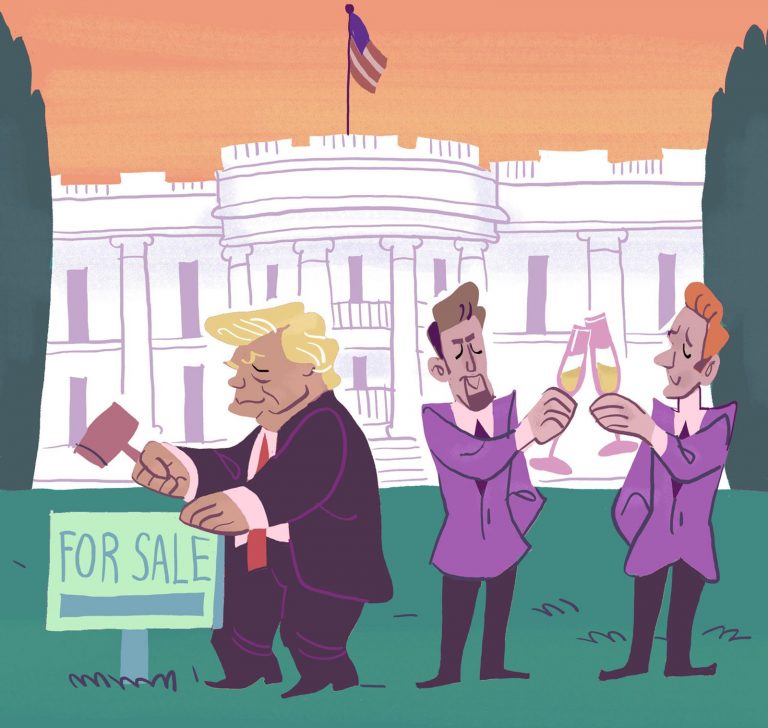
America For Sale! Everything Must Go!

The U.S. government has fallen into the hands of people who lack proper metaphors; all they know is business. The nation should be ​“run like a business” according to these unimaginative suits among the GOP, who haven’t read or studied enough to consider how the government might be run like anything else. The problem with this thinking is it will, by inevitably following the profit motive, lead to a terminal phase. With the House passage of President Donald Trump’s budget legislation ​“One Big Beautiful Bill,” the United States has reached the private equity looting stage of the metaphor. The logic of this scheme will collapse, but it might bring us all down with it.

What Many Environmentalists Get Wrong About The Money System

Amongst my environmentalist friends, one of their favourite novels of recent times is ‘Ministry for the Future’. In the book, the author Kim Stanley Robinson shocks us with how abruptly climate change might unfold. He also describes a policy response which seems unusually bold – the creation of a new currency that is linked to reducing carbon emissions. As an expert in alternative currencies, I was delighted that popular fiction turned some of my ecologically-minded friends on to the subject of money. I’d viewed environmentalism as failing to stem pollution and habitat destruction because the dominant ideology of growth, competition, and profit was seemingly out of their scope.

Trump Is Setting The US Economy Up For Another Great Financial Crisis

The financial system of the United States has always been prone to instability and crises. Now, however, under the new Trump administration, which is pushing for major cuts in regulation, including in the cryptocurrency sector in which the Trump family has a major financial stake, the financial system has become more vulnerable than ever, posing serious risks to the wider economy. Of course, this matters very little to Donald Trump, his family, and his billionaire friends. For Trump, the actual meaning of “America First” is “self-enrichment.” In the interview that follows, progressive economist Gerald Epstein, a leading expert in finance and banking, talks about the changing nature of the U.S. finance system under Trump 2.0.
assetto corsa mods

Urgent End Of Year Fundraising Campaign

Online donations are back! Keep independent media alive. 

Due to the attacks on our fiscal sponsor, we were unable to raise funds online for nearly two years.  As the bills pile up, your help is needed now to cover the monthly costs of operating Popular Resistance.

Urgent End Of Year Fundraising Campaign

Online donations are back! 

Keep independent media alive. 

Due to the attacks on our fiscal sponsor, we were unable to raise funds online for nearly two years.  As the bills pile up, your help is needed now to cover the monthly costs of operating Popular Resistance.

Sign Up To Our Daily Digest

Independent media outlets are being suppressed and dropped by corporations like Google, Facebook and Twitter. Sign up for our daily email digest before it’s too late so you don’t miss the latest movement news.