Skip to content

China

Communism Defeated Fascism Eighty Years Ago

On 13 November, at the Global South Academic Forum in Shanghai, China, we released our latest study, The 80th Anniversary of the Victory in the World Anti-Fascist War – Understanding Who Saved Humanity: A Restorationist History. An edited version of my keynote speech ‘Two Lies and an Enormous Truth’, delivered to introduce the study, is reproduced here. In early August 1942, the Soviets set up loudspeakers across Leningrad. The city had been under siege for over 300 days. People were starving. The conductor, Karl Eliasberg, kept the Leningrad Radio Orchestra going by holding rehearsals and personally taking his musicians to feeding stations.
China Warns Of Severe Consequences If Japan Fails To Retract Threats

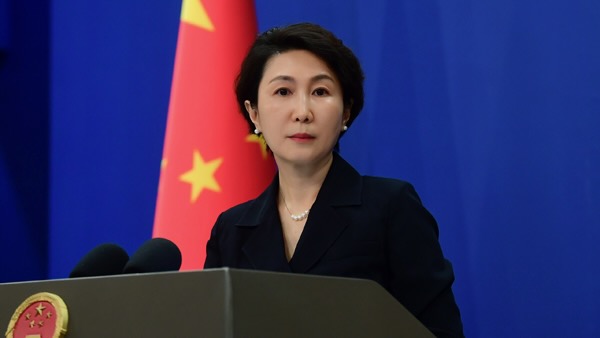
China reiterated its demand that Japanese Prime Minister Sanae Takaichi retract her statement threatening military intervention in the event that China tries to forcefully integrate Taiwan into the mainland. It warned of strong counter measures otherwise. The “Japanese prime minister’s erroneous remarks on Taiwan have fundamentally eroded the political foundation of China-Japan relations and triggered strong outrage and condemnation from the Chinese people,” said official spokesperson of the Chinese Ministry of Foreign Affairs, Mao Ning, in response to a question on Wednesday, November 19.

China Tells G7 To Abandon Cold War Mentality

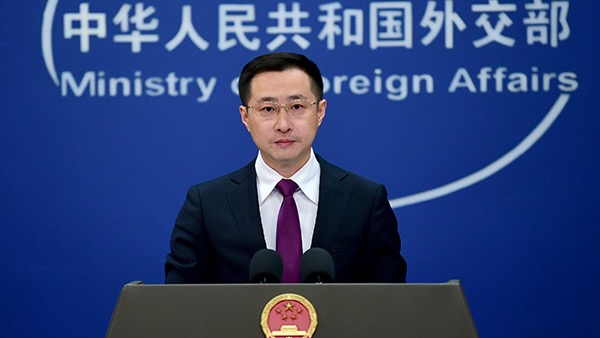
China asked the Group of Seven (G7) countries to abandon their Cold War mentality and ideological bias on Thursday, November 13, after they accused China of causing instability in the East Asian region. The G7 should “take a clear grasp of the global trend, abandon the Cold War mentality and ideological bias and stop manipulating issues related to China,” said Lin Jian, spokesperson of the Chinese Ministry of Foreign Affairs, while answering a question related to the allegations made by the G7. On Wednesday, a joint statement issued after the G7 foreign ministers’ meeting in Niagara in Canada expressed support for “Taiwan’s meaningful participation in appropriate international organizations” and accused China of causing political and economic instabilities.

The US War On China, Venezuela, And The International Left

Everywhere you look, the United States is at war– at home, through military occupation of cities, institutional violence, and state-sanctioned kidnappings, and abroad, through economic coercion, proxy warfare, and endless intervention. In times like these, when it is far too easy to be overwhelmed by the inexhaustible nature of the war machine, we must remember that these are not separate crises, but different fronts of the same struggle. And to resist one is to resist them all. The enemy, in every case, is U.S. imperialism.

Canadian Auto Isn’t In ‘Crisis’, It’s In Danger Of Extinction

Canadian autoworkers have faced many crises over the years, but the present threat is distinct. Lana Payne, President of Unifor, has warned that “If we don’t push back hard against him [US President Donald Trump] and against these companies, we’re going to lose it all.” So far, the debate over what to do has started and stopped with Trump’s tariffs. But the threats go deeper, both for auto companies and for our ability as workers and citizens to determine democratically what kind of society we want – that is, for Canada’s substantive and not just formal sovereignty.

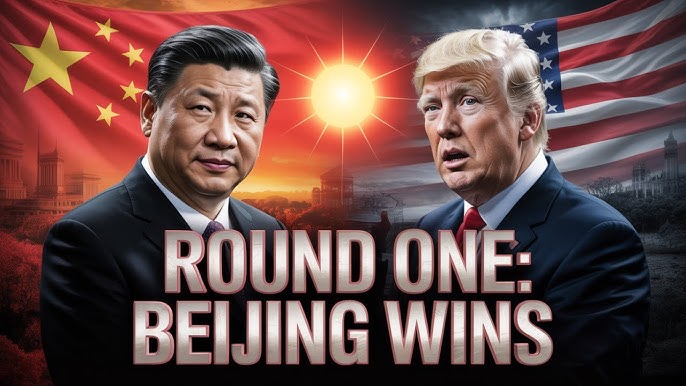
China Surprised The US: Round One Goes To Beijing

In this episode, KJ Noh joins India & Global Left to break down the real meaning of the recent Xi–Trump talks — beyond the headlines. We explore why China surprised the United States, why “Round One goes to Beijing,” and what leverage each side truly holds in this evolving geopolitical contest. We also look at the deeper strategic competition shaping U.S.–China relations, the power shifts happening underneath the diplomacy, and what this moment means for the future of the Global South as more countries seek autonomy, multipolarity, and alternatives to the Western-led order.

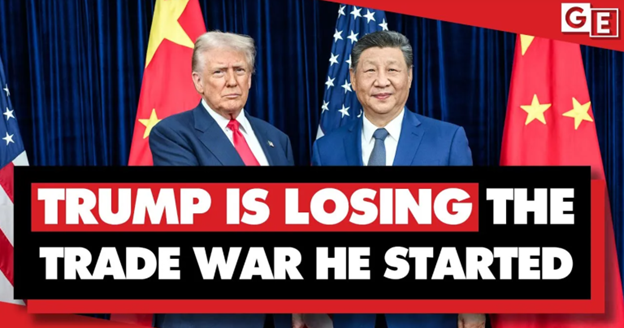
Trump Is Clearly Losing The Trade War With China, Which He Started

Donald Trump is losing the trade war against China, which he himself started. Trump held an important meeting with China’s President Xi Jinping in the South Korean city of Busan on 30 October. There, they came to a new agreement, which amounted to a one-year truce. The US government agreed to lift most of the punitive measures that it had imposed on China since April 2025, essentially bringing the situation back to what it was in January, when Trump entered office for his second term. Although this is not the end of the trade war, China clearly won this battle. The Financial Times (FT) noted that, “Unlike nearly 10 years ago, when Trump’s first trade offensive caught Beijing by surprise, this time a better prepared and economically more powerful China has been able to fight its once far mightier opponent to a standstill”.

The World Economy’s Centre Of Gravity Shifts To Asia

On the last day of October 2025, leaders from the 21 nations of the Asia-Pacific Economic Cooperation (APEC) forum will meet in the city of Gyeongju in the Republic of Korea (South Korea) for the organisation’s 33rd summit. Since its founding in 1989 in Canberra, Australia, APEC has promoted building a zone of ‘free and open trade’ – a concept outlined by the Bogor Goals, which came out of the summit in Indonesia in 1994. APEC is a creature of its times. First, it emerged as an instrument of Japan’s Pacific Economic Cooperation Council with the goal of building regional supply chains after the Plaza Accord (1985) appreciated the yen against the dollar.

Understanding The Changes Unseen In A Century

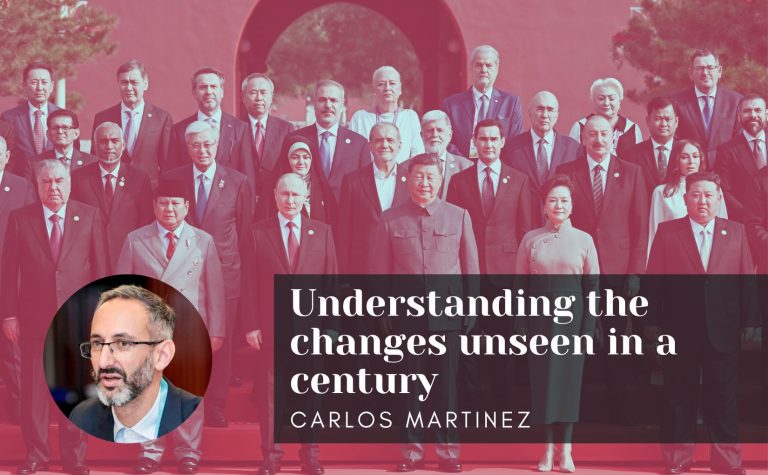
General Secretary Xi Jinping has observed several times that “the world is undergoing profound changes unseen in a century”. What are these changes, and what are their implications for the current global situation? Before addressing the changes the world is experiencing today, it is worthwhile reflecting on the major changes that occurred a century ago, since the dramatic shifts of that time laid the foundations for the transformations we are witnessing now. The October Revolution of 1917 was a watershed moment marking the beginning of humanity’s transition from capitalism to socialism.

Germany Is Sabotaging Its Relations With China

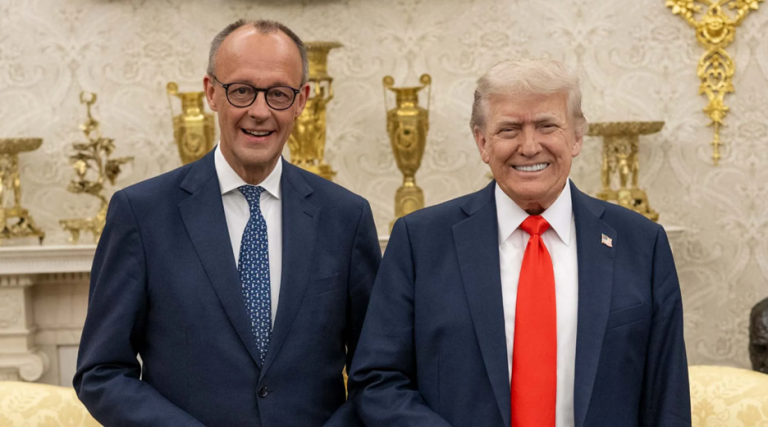
The visit of German Chancellor Helmut Schmidt to Beijing 50 years ago was a visit that lifted German-Chinese relations to a completely new level. On 31 October 1975, Schmidt met the Chinese head of state Mao Zedong. In preparation he had read Mao’s poems. It was the first visit of a German chancellor to China. Schmidt remained someone who, throughout his life, wanted to break with the colonial past of the West in China, and advocated relations on equal footing and with mutual respect. For example, in his discussion of the book The Governance of China by Chinese President Xi Jinping, he called on the West to replace arrogance with fair competition in its relationship with China.

The ‘Donroe Doctrine’: Trump’s Neocolonial Plan For Latin America

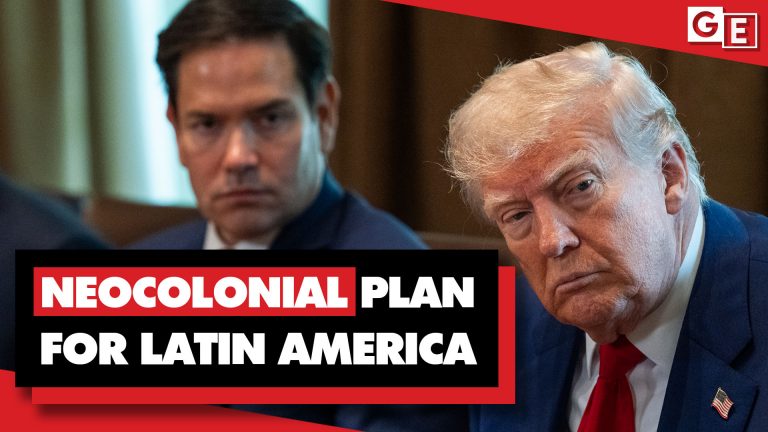
The US government has always meddled in Latin America’s internal affairs. This is far from new. The United States overthrew at least 41 governments in Latin America from 1898 to 1994, according to research by Columbia University historian John Coatsworth. In the past three decades, Washington has backed dozens more coups, coup attempts, regime-change operations, and “color revolutions” in the region. The US military has intervened in every single country in Latin America, according to data from the Congressional Research Service. (The only exception is French Guiana, which is a colony of France.) US imperialism has always been bipartisan in Washington, and has continued under both Republican and Democratic presidents.

Communist Party Of China Opens Deliberations On 15th Five-Year Plan

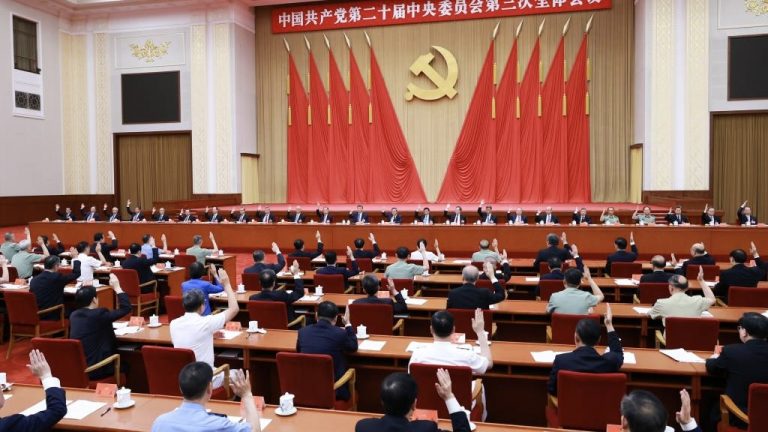
The Fourth Plenary Session of the 20th Central Committee of the Communist Party of China (CPC) began this Monday, October 20, in Beijing, with the agenda focused on drafting proposals for the 15th Five-Year Plan (2026-2030) for the country’s economic and social development. The discussion of the five-year plan at the Fourth Session represents a change in the usual calendar, as this discussion normally takes place at the Fifth Plenary Session. The change may have occurred due to the delay of the Third Plenary Session, which did not take place until August 2024. Following the usual calendar, it was expected to take place in 2023.

Madagascar Erupts, Indian Ocean Power Dynamics In Flux

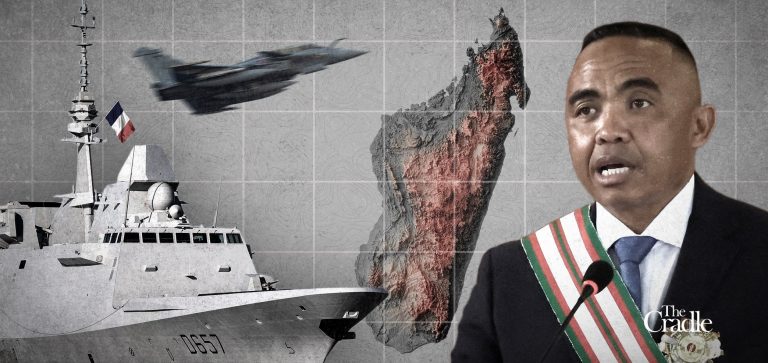
After weeks of protests and a mutiny, former Madagascar president Andry Rajoelina boarded a French military plane and fled the country. With a public angry at a corrupt, western-aligned government, Madagascar has the potential to shape its future and the whole Indian Ocean. This development comes as global powers scramble for strategic access in a region that holds five of the world’s nine maritime chokepoints. India, China, and the US are expanding their naval and commercial footprint, while France – once the uncontested gatekeeper of these waters – finds itself besieged and in retreat.

Washington’s New War Front To Box In China And Turkiye

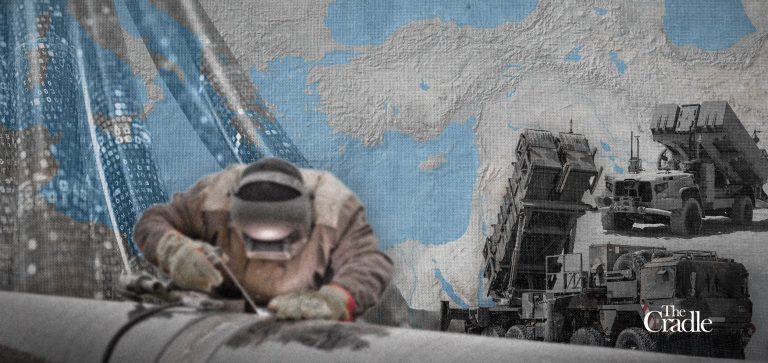
Turkish Foreign Minister Hakan Fidan’s words earlier this month were a clear declaration that the relatively calm waters of the Eastern Mediterranean have become the front line in a wider geopolitical conflict. The threat that “Turkiye will strike first” was not only directed at Greece, Cyprus, or Israel, but at the new security architecture forming on the edge of the west, what can be called the “Mediterranean Arc.” This tripartite strategic partnership has evolved beyond a regional coalition countering Ankara’s ambitions. It now forms a critical node in a broader geopolitical constellation known as the Indo-Mediterranean Rim – the central stage of intensifying competition between the US and China across Eurasia and beyond.

China’s Material Squeeze Exposes US Industrial Fragility

When Washington declared an economic war on China’s technology ascent, it assumed it held the upper hand. Tariffs, export bans, entity lists and chip sanctions were meant to isolate Beijing, choke its access to critical inputs, strangle its technological development and protect American primacy. Yet with remarkable precision, Beijing has now demonstrated that the United States is the one more deeply entangled in – and dependent upon – China’s command of critical material supply chains. China’s latest round of export controls on lithium batteries, graphite anode materials, and rare earth technologies amounts to the most significant intensification yet in the global race for material sovereignty.
assetto corsa mods

Urgent End Of Year Fundraising Campaign

Online donations are back! Keep independent media alive. 

Due to the attacks on our fiscal sponsor, we were unable to raise funds online for nearly two years.  As the bills pile up, your help is needed now to cover the monthly costs of operating Popular Resistance.

Urgent End Of Year Fundraising Campaign

Online donations are back! 

Keep independent media alive. 

Due to the attacks on our fiscal sponsor, we were unable to raise funds online for nearly two years.  As the bills pile up, your help is needed now to cover the monthly costs of operating Popular Resistance.

Sign Up To Our Daily Digest

Independent media outlets are being suppressed and dropped by corporations like Google, Facebook and Twitter. Sign up for our daily email digest before it’s too late so you don’t miss the latest movement news.